
Google AI Search Is Changing SEO: What Businesses Should Fix On Their Website First
Search is changing faster than most business owners expected.
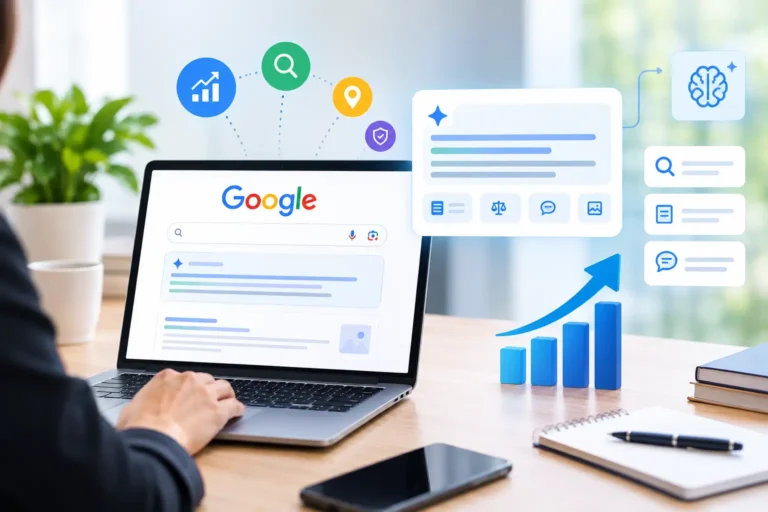
A few years ago, SEO was mostly about ranking a page on Google. You picked keywords, improved your website, wrote blogs and waited for traffic. That still matters. It really does. But now users are asking longer questions and Google is answering more of those questions through AI features like AI Overviews and AI Mode.
Google has made one thing clear. Strong SEO fundamentals still matter. There is no magic shortcut for AI search. A business still needs helpful content, clear website structure, crawlable pages and information that answers real questions.
So the question is not “Is SEO dead?”
No. It is not.
The real question is this: does your website explain your business clearly enough for both people and AI search systems to understand it?
Why Normal SEO Content Is Not Enough Anymore
Many business websites are still written like old brochures.
We are the best company.
We provide quality services.
Contact us today.
That type of content does not help much anymore.
A customer wants answers. What do you offer? Who do you help? Where do you provide services? What problems do you solve? Why should someone trust you before speaking to your team?
AI search is built around questions and answers. If your website does not answer anything properly, it becomes harder for Google and AI systems to understand your value.
This is where SEO, AEO, AISEO and GEO start working together.
SEO helps your pages become visible in search.
AEO helps your content answer specific questions.
AISEO helps structure your website for AI driven discovery.
GEO helps your brand become more understandable in generative search results.
The names sound technical but the idea is simple. Your content needs to be useful.
Start With Your Service Pages
Your service pages are more important than random blogs.
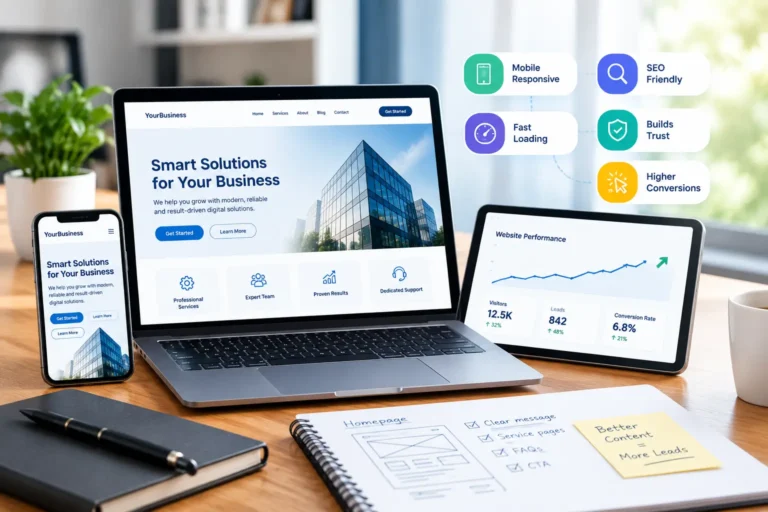
If you offer website development, branding, SEO, social media marketing, Google Ads, Meta Ads, video editing or AI automation, each service should have its own strong page. Not a small paragraph. Not a few lines. A real page that explains the service in a way a serious customer can understand.
A good service page should answer:
What is this service?
Who needs it?
What problems does it solve?
Which industries is it useful for?
Which locations do you serve?
What makes your approach different?
What should the visitor do next?
This structure helps users. It also helps search engines and AI search tools understand what your business does.
For example, if someone searches for a website development company, they should land on a page that clearly explains website design, responsive development, SEO ready structure, landing pages, mobile experience and conversion focused content.
If someone searches for an SEO agency, they should find a page that explains SEO, AEO, AISEO, GEO, local SEO, on page SEO, content strategy and website visibility.
Clear pages bring clearer search signals.
Add FAQs That Answer Real Questions
FAQs are not only a design section. They are useful for search.
People now search with full questions like:
How can SEO help my clinic get more patients?
Do I need Google Ads or Meta Ads first?
What makes a website good for AI search?
How much content should a service page have?
Why is my website not bringing leads?
Your website should answer these questions directly.
A page with clear FAQs gives search engines more context. It also gives visitors confidence because they feel understood before they even contact you.
This is one reason DEZINIC now treats FAQs as part of SEO Growth AISEO. They help users, they support AEO and they make your website more complete.
Make Your Website Less Vague
This is one of the biggest problems I see.
A business writes “we provide digital solutions” but does not explain what that means. Another company says “we help brands grow” but never explains how. A visitor should not have to guess.
Be clear.
If you provide website development, say that.
If you provide local SEO, say that.
If you manage Google Ads and Meta Ads, say that.
If you create AI chatbots or business automation, say that.
If you provide branding and graphic design, say what kind of branding work you do.
You can still sound premium and human. Clear does not mean basic.
Actually, clear writing often feels more professional because it respects the reader’s time.
Use Industry Examples
Google and users both need context.
If you work with clinics, schools, salons, BPO companies, real estate firms, ecommerce brands, IT companies or consultants, say it naturally. A clinic owner searching for a website development company will feel more connected if your content speaks about clinic websites, patient inquiries, treatment pages and local SEO.
A school owner will understand faster if you talk about admissions pages, local SEO, parent questions and Google Business Profile visibility.
A salon owner will care about service pages, booking buttons, location pages, offers and Instagram ready visuals.
This is why DEZINIC uses industry focused content. It shows relevance.
Use Location Signals Carefully
If your business serves Pakistan, USA, Canada, KSA, Australia and selected global markets, your content should mention that. But do not stuff country names everywhere.
Use location naturally in places where it helps:
Homepage
Service pages
Location pages
Case studies
FAQs
Blog content
Contact page
A location signal should feel useful, not forced.
For DEZINIC, this matters because the company is based in Pakistan but serves international clients. The content should show both sides. Local trust and global capability.
Your Website Needs Better Internal Linking
AI search and Google both need to understand how your content connects.
If you publish a blog about Google AI Search, it should link to your SEO Growth AISEO service page. If you publish a blog about website leads, it should link to your website development service. If you publish a case study about school SEO, it should connect with your SEO page and case studies page.
This helps users move through the website.
It also helps search engines understand your content structure.
A blog should not sit alone. It should support the full website.
What Businesses Should Fix First
Start with your homepage. Make sure it explains your business clearly.
Then improve your service pages. Each major service should have enough content, proper headings, FAQs and calls to action.
After that, add case studies. Real work builds trust faster than claims.
Then create blogs that answer actual questions. Not random blogs. Useful ones.
Finally, review your contact flow. If someone wants to schedule a call, send a WhatsApp message or submit a form, the action should be easy.
The order matters.
A blog strategy will not help enough if the main service pages are weak.
How DEZINIC Helps
DEZINIC helps businesses improve SEO, AEO, AISEO and GEO through website development, content planning, service page structure, case studies, FAQs and digital growth strategy.
We do not write content only to fill a page. We write so people can understand the business and search engines can understand the page.
That is where better rankings begin.
If your website is not answering the right questions, it is time to fix the structure before your competitors do.
FAQs
What is AISEO?
AISEO means creating website content and structure that supports Google search and AI search visibility. It focuses on clear answers, useful service pages, FAQs and better content organization.
Is SEO still important with AI search?
Yes. SEO is still important. AI search has made helpful content, strong structure and clear answers even more important for business websites.
What should I update first on my website?
Start with homepage copy, service pages, FAQs, case studies, local content and internal links between blogs and services.
Do blogs help AI search?
Yes, but only when the blogs answer real questions and connect properly with your service pages. Random blogs do not help much.
Can DEZINIC help with SEO and AI search content?
Yes. DEZINIC provides SEO Growth AISEO, website content, service pages, blogs and search focused website planning.